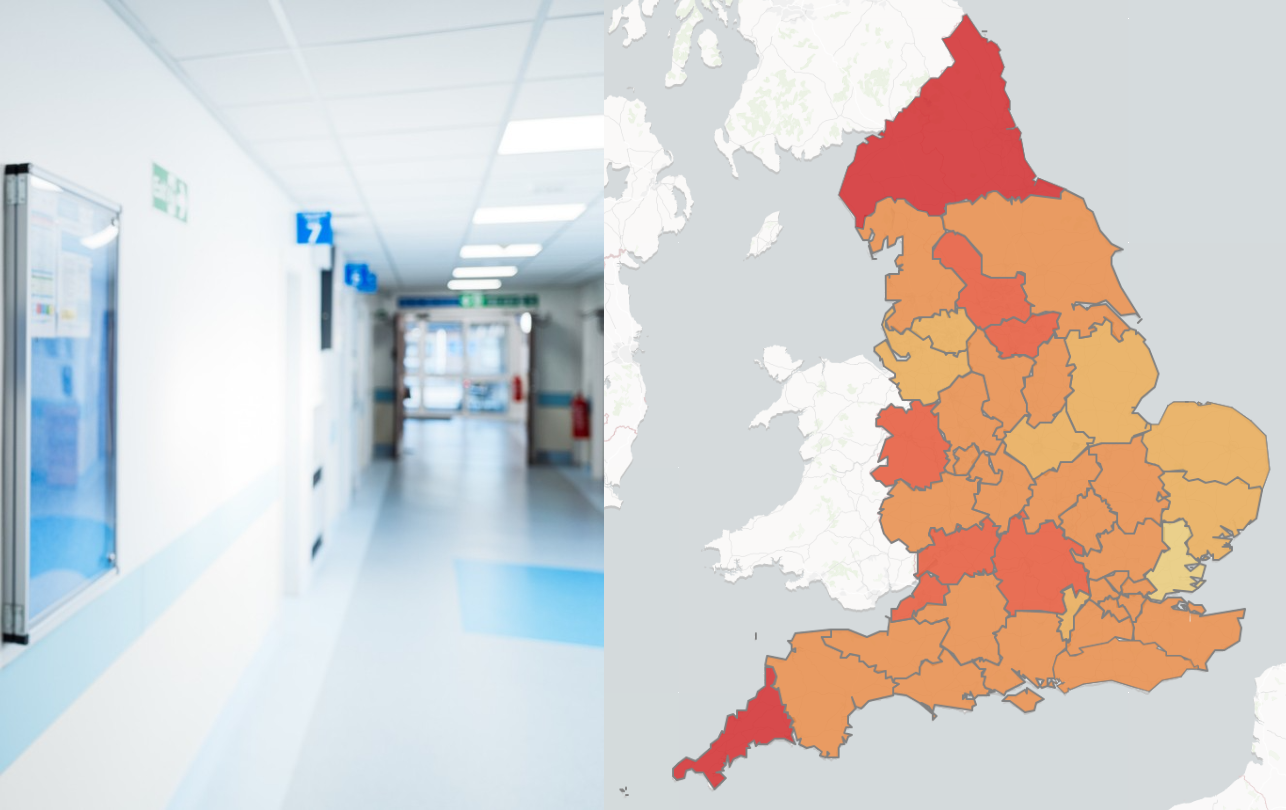
In this visualisation, we have NHS RTT waiting times data from NHS England at ICB level.
NHS England has published the latest Referral to Treatment (RTT) figures for December 2025, revealing that the number of incomplete cases has stalled at 7,199,624 – an increase of half a percent from the previous month. However, the NHS estimates the true figure is closer to 7.3m due to data submission issues.
Across all ICBs, on average 61.5% of pathways are closed within 18 weeks. This figure is 3.5 percentage points below the government’s 65% performance threshold for March 2026. Additionally, it remains 30.5 percentage points below the 92% constitutional standard for patients waiting to start treatment.
In December, patients waited 13.4 weeks from their initial referral to the start of treatment. Oral Surgery remains the lowest-performing specialty, with only 51.8% of patients treated within the 18-week window.
The data team at Polimapper has visualised the latest figures at the Integrated Care Board (ICB) level to highlight geographical health trends across England.
NHS Cornwall and the Isles of Scilly ICB remains the top performer, closing 71.4% of pathways within 18 weeks, which contrasts sharply with the 50.9% recorded by the Mid and South Essex ICB. Explore the figures in your area here.
Geodata context
While the recent dip in figures is welcome, the decline is not solely due to record levels of clinical care. A significant portion of this improvement stems from “validation” efforts, a process where trusts are incentivised to remove cases from the list that no longer require treatment. These “unreported removals” are not captured in official clinical data, meaning many patients are leaving the list without having received care.
Francesca Cavallaro, senior analytical manager at the Health Foundation: “Completed pathways have increased since 2024, indicating that more patients are starting treatment or finding out they do not need it. These account for most removals from the waiting list.”
“While the increase in completed pathways is encouraging, it hasn’t kept pace with the growth in new referrals. Instead, in recent years, the fall in the waiting list has been driven by increases in ‘unreported removals’, which are cases removed from the waiting list for other reasons.”
Sarah Scobie, deputy director of research at Nuffield Trust: “The NHS is clearly finding it very difficult to maintain progress on getting through the backlog.”
“We hope to see more of [the reduction to the waiting list] coming from extra treatment rather than other things like administrative processes.”
“It makes complete sense that the NHS is cleaning up waiting list data to remove people who no longer need to be there. This process isn’t new.”
Sarah Woolnough, chief executive at the King’s Fund: “Getting the waiting list down to the lowest level in nearly three years is a real achievement. Questions remain to what extent validation is being used to drive the fall in numbers rather than the number of patients treated.”