Rough sleeping rates in England rose in 2025, with single-night figures reaching a record high last autumn. These findings come as the government announced two new funds to tackle homelessness, allocating £50 million to local councils and support organisations.
New statistics from the Ministry of Housing, Communities and Local Government (MHCLG) recorded 4,793 people sleeping rough on a single night in autumn 2025, surpassing the previous record of 4,751 set in 2017. The overall autumn rough sleeping rate was 8.2 people per 100,000. However, across the final month of 2025, the over the month rate was recorded at 13.7 per 100,000.
The trend varied significantly by region: in 51% of local authorities, the number of people sleeping rough increased; in 10%, the figures remained stable; and in 40%, there was a recorded decrease.
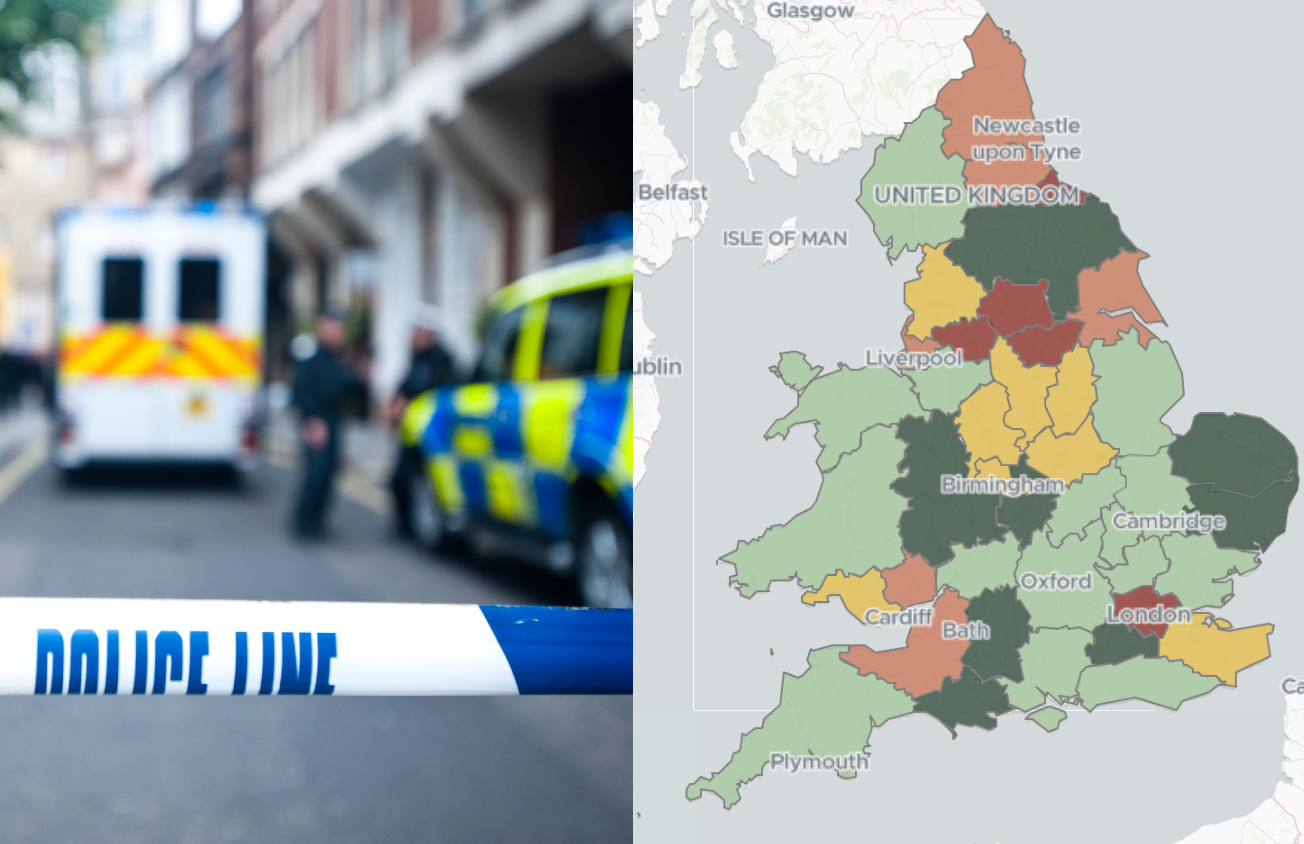
The data team at Polimapper has visualised these statistics at the local authority level to highlight significant, often urban and rural, geographical disparities across the country.
During the autumn snapshot, the City of London recorded the highest rate at 549 people per 100,000. This was followed by the London boroughs of Westminster (171) and Camden (62). At the other end of the scale, 15 local authorities, including Hart and Melton, reported zero people sleeping rough.
In December, Westminster and Sheffield saw the highest monthly rough sleeping rates at 611 and 175 per 100,000, respectively. Conversely, 11 local authorities reported no rough sleeping activity.
Geodata context
In an effort to combat rising trends, the government has announced a £50 million funding boost aimed at frontline homelessness services.
This includes a £35 million “Short-Term Rough Sleeping Fund” to help councils fast-track support for those currently on the streets, and £15 million for the “Long-Term Rough Sleeping Innovation Programme” to test new prevention methods.
Emma Haddad, chief executive at St Mungo’s: “Homelessness, in all its forms, continues to rise across England: a devastating reality shown again in today’s statistics.”
“The Government has set out its ambition for change in the National Plan to End Homelessness, and the real challenge now is delivery. What will move the needle is sustained, structured support from frontline services like St Mungo’s backed by clear lines of accountability across Government. Funding is also essential, and today’s announcement of £15 million as part of the Long-Term Rough Sleeping Innovation Programme is much welcomed. Sustained investment will be key to driving change and realising our shared goal of ending homelessness for good.”
Josh Nicholson, head of housing and communities at the Centre for Social Justice: “The government’s homelessness strategy is right to focus on prevention, but if it doesn’t address the immediate crisis on our streets, it will be judged a failure.”
“Rough sleeping has been out of control for too long and more of the same won’t cut it. Ministers still have time to act, by prioritising proven interventions like Housing First, and to scale them up within the strategy before it’s too late.”